
The design goal of many collaboration tools is to reproduce as closely as possible some aspect of the face-to-face meeting experience so that virtual project teams can be as productive as co-located teams. What I have found is that some tools developed for virtual teams actualy work better than the process they were built to replace. A great example of this is the whiteboard. Online whiteboards available today for free make many common whiteboarding tasks easier than the old fashioned flip-charts or dry-erase markers. You can use electronic whiteboards to brainstorm, problem solve, describe complex concepts, create flow-charts, or even vote on issues as a team. All it takes to be successful is a tool that has a minimum of features that are well-implemented and intuitive.
Just like desktop sharing tools (see my last blog), online whiteboards have come a long way in the past few years. There are now many free tools that have some excellent features and would be a great addition to any virtual teams’ tool box. I will mention a few here and comment on their pros/cons. Note: this is just a sample of current offersings and not intended to be an exhaustive list nor an endorsement of, nor recommendation for, any particular tool. Continue reading
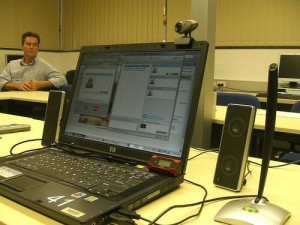

 The number of technologies we have at our fingertips today to communicate with our virtual project team members is nothing short of daunting. In addition to the most natural and effective method we all know as ” face-to-face,” we have phone (wired and wireless), voicemail, email, instant messaging, blogs, RSS, SMS and Twitter, to name just the big ones. Unfortunately, none of us are taught how to best use these techologies to get our ideas across to each other and to minimize the impact on our colleagues. It is no wonder, then, that we all struggle with them.
 One of the more difficult team dynamics project managers must face from time-to-time is conflict. The ‘conflict’ can be project-related or interpersonal, but either way, strong feelings are often involved, making rational resolutions difficult. For virtual teams where face-to-face time is rare or non-existent, conflict resolution can be especially challenging, even for the highly skilled virtual team manager.
  In the first part of this series I talked about how future project leaders may select team members for their projects. In this installment, I will discuss the future of virtual team spaces, which include real-time tools that facilitate ‘in-person’ sharing of information and the online workspaces where project documents are stored.